
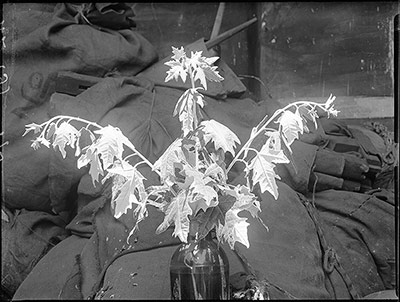
Leaves of 'White Poplar"
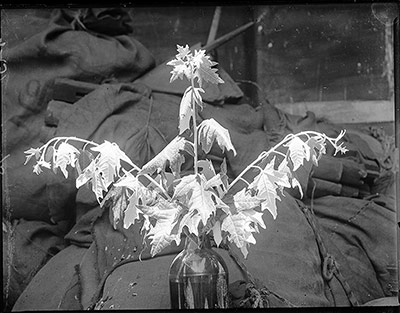
1998.286.205.1 (Glass negative)


 Compare

 Compare
Key Information
Photographer
Sir Charles Bell or Rabden Lepcha?
Collection
Sir Charles Bell
Date of Photo
1920-1921
Region
Lhasa
Accession number
1998.286.205.1
Image Dimensions
78 x 103
Further Information
Photographic Process
Negative Quarter Plate
Date Acquired
Donated 1983
Donated by
St Antony's College, Oxford
Expedition
Sir Charles Bell's Mission to Lhasa 1920-21
Previous Catologue Number
Q.193
Previous Pitt Rivers Museum Number
BL.Q.193a
Related Collections
British Library, Oriental and India Office Collections
Manual Catalogues -
Manual Catalogues - Bell's List of Illustrations entry: "[No. of chapter] XLII. [Subject of Chapter] The Flora [Subject of Illustration] Q193 (g). Leaves of the "White Poplar" tree at Lhasa."
Other Information - Related Images
Other Information - Related Images: Bell does not distinguish in his List of Illustrations between 1998.286.205.1 and 1998.286.205.2 and both images may be referenced by the caption for Q.193 [MS 12/8/2004]
Other Information - Cultural Background
Other Information - Cultural Background: Bell's Diary entry for 9th June:"There are two kinds of poplar trees in Lhasa; one like the kind at Gyantse; the other different to any poplar in Gyantse, the Chumbi Valley or Sikkim. The wood of the second kind somewhat resembles that of the poplar in Sikkim and the Chumbi Valley but the leaves are smaller and shaped more like the leaves of a maple. This kind is called "White Poplar" ( ja - kar ) [Tibetan script] in Lhasa. // It is used for house pillars, though soft, because it is easily carved with the designs appropriate to such pillars. Neto Jongpen thinks it is indigenous to Tibet, for he says the wood is rather poor and it would not have been worthwhile to introduce it from China or elsewhere. I do not remember to have seen it anywhere in India." [Diary Vol. XI., p.1]
For Citation use:
The Tibet Album.
"Leaves of 'White Poplar""
05 Dec. 2006. The Pitt Rivers Museum.
<http://tibet.prm.ox.ac.uk/photo_1998.286.205.1.html>.
For more information about photographic usage or to order prints, please visit the The Pitt Rivers Museum.
© The Pitt Rivers Museum