
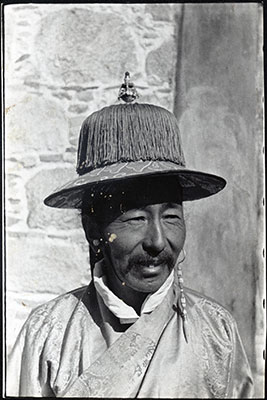
Rai Bahadur Norbhu Dhondhup
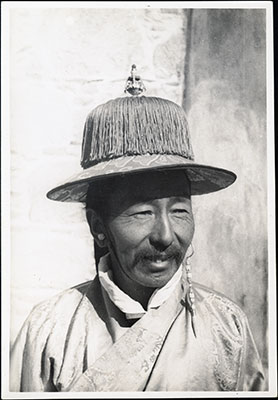
1998.131.441 (Print black & white)


 Compare

 Compare
 Compare
Key Information
Photographer
Frederick Spencer Chapman
Collection
Frederick Spencer Chapman
Date of Photo
December 10th 1936?
Named Person
Norbhu Dhondup
Region
Lhasa > Dekyi Lingka
Accession number
1998.131.441
Image Dimensions
159 x 110
Further Information
Photographic Process
Print gelatin silver
Date Acquired
Donated 1994
Donated by
Faith Spencer Chapman
Expedition
British Diplomatic Mission to Lhasa 1936-37
Photo also owned by
Frederick Spencer Chapman
Previous Catologue Number
BH.9 [view film roll]
Previous Pitt Rivers Museum Number
SC.T.2.441
This Image also appears in another collection
1998.131.401
Other Information
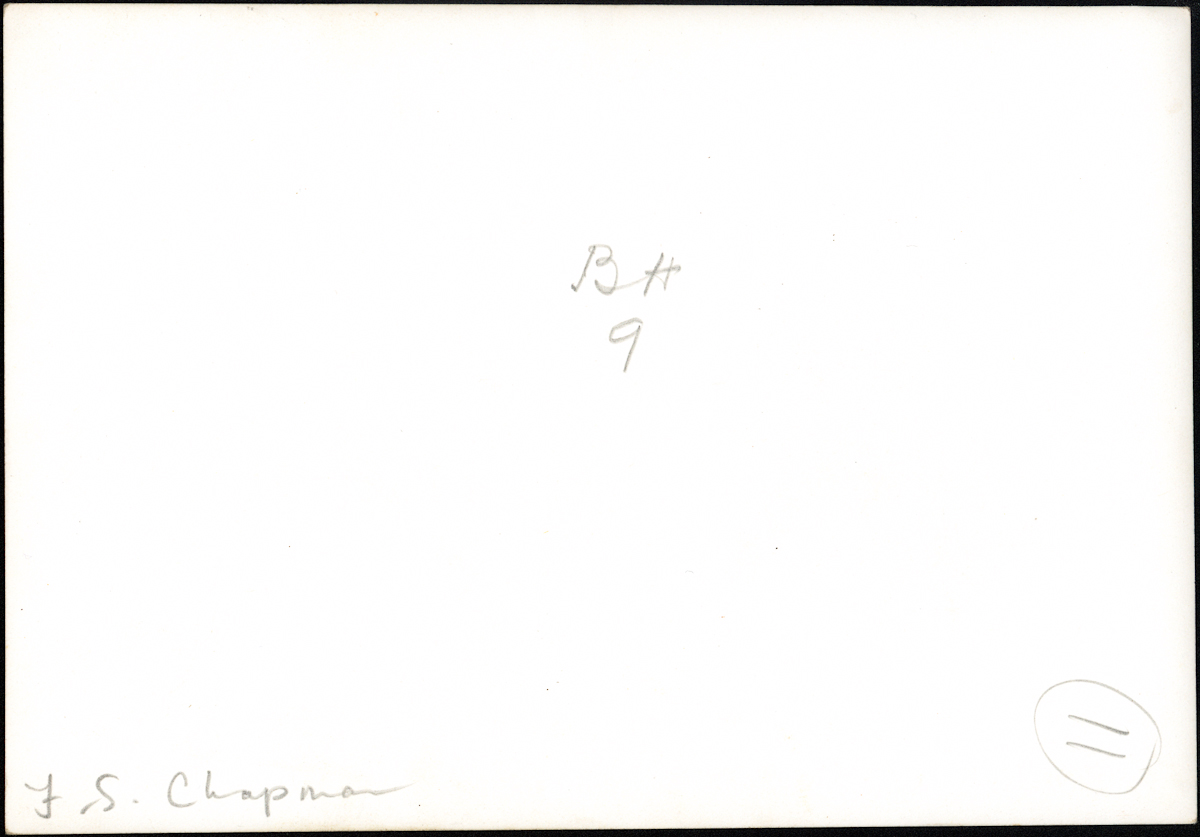
Notes on print/mount - 'BH.9' has been written on the back of the print in pencil, as has the name 'F. S. Chapman' in the bottom left hand corner. The numbr '11' has been written in the bottom right hand corner, encircled [MS 25/03/2006]
Manual Catalogues -
Manual Catalogues - Caption in Chapman's hand-written list of negatives made whilst on the Mission to Lhasa, 1936-7 [See PRM Manuscripts Collection]: 'Norbhu v. [ticked by FSC]'; PRM Manuscripts Collection: ‘List of Tibetan Prints and Negatives’ - Book 2: ‘ “Rogues Gallery” - 37/3 - Norbhu Dzasa our interpreter’ [MS 25/03/2006]
Exhibition - This image appeared in the 2003 Temporary Exhibition at the Pitt Rivers "Seeing Lhasa: British Depictions of the Tibetan Capital 1936-1947"
Biographical Information - Rai Bahardur Norbhu OBE, CBE (1904-1947) was the confidential clerk to the British Political Officer for Sikkim, Bhutan and Tibet. He was born in Kalimpong (Sikkim) and had no aristocratic connections but in school in Darjeeling was chosen to be an interpreter for Colonel L. A. Waddell (the scholar and doctor) during the Younghusband Expedition of 1903-1904. When Youngshusband left Lhasa he refused to go with him as he was engaged to a Tibetan girl and was treated as a deserter. However, he was used by the British as an interpreter again when the Panchen Lama visited India in 1905. He then served as confidential clerk to the British Trade Agent in Gyantse and the Political Officer for Sikkim, Bhutan and Tibet. In 1920 he accompanied Sir Charles Bell to Lhasa and in 1923 visited again with Leiut.-Col. Bailey. In 1927 the 13th Dalai Lama made him a depön (general) in the Tibetan army. In 1928 he organized and accompanied Leiut.-Col. Weir’s visit to Lhasa and in 1934 was ordered to Lhasa to counteract the Chinese Mission. Following the death of Frederick Williamson in Lhasa in 1935, Norbhu became Gould’s confidential clerk for the 1936 Mission. He reported that his life had been endangered numerous times by Russian and Chinese agents during his trips to Tibet but pledged, “I… shall not die before I murder at least two, as I have my rifles and my pistols always loaded”. Gould writes of him “his greatest asset was the fact that he was a man who had no guile in him. He was full of life and experience and he was trusted. The only time I ever saw him put out was when I told him that it was not customary to wear both O.B.E and C.B.E. decorations at the same time. Some years later, an hour before he died, he sat up in bed and called the doctors fools for suggesting that he was ill… He had little education, lots of common sense, a ready laugh and infinite guts”. (1957:XX) Norbhu died in 1947 of tuberculosis. [CH 2003]
Other Information - Related Images
Other Information - Related Images: Images prefixed with 'BH.' comprise a group of negatives containing images of Officials, a Khampa man, Sir Basil Gould and various personnel on the Mission in 1936-7. They all seem to have been taken on, just prior to or immediately after December 10th 1936. This was the day on which an official visit was made to Kundeling Monastery to observe the 'Disease Chasing Ceremony' [MS 23/03/2006]
For Citation use:
The Tibet Album.
"Rai Bahadur Norbhu Dhondhup"
05 Dec. 2006. The Pitt Rivers Museum.
<http://tibet.prm.ox.ac.uk/photo_1998.131.441.html>.
For more information about photographic usage or to order prints, please visit the The Pitt Rivers Museum.
© The Pitt Rivers Museum